The story appears simple on the surface, but is revealed, especially after multiple viewings, as more multi-layered and textured than Cassavetes at his best. Ostensibly it concerns a 14-year old Catholic girl, Wynne (Agutter) growing up in this post-modern wasteland, who develops a crush on her much older adoptive brother (Marshall)- a crush which perversely deepens and grows into infatuation once she starts to believe he is the local sex killer. This is in itself an idea that makes you sit up and jolt, but as the narrative develops, it continues not necessarily along a linear path but in several confusing and fascinating directions: the family's history, (detailed effectively in chilling flashback during an improvised seance) is a chequered one, and has suffered at least one major relocation and upheaval in the last ten years.
At the crux, however, it's the depiction of socialal changes that make I Start Counting so fascinating and elevate its language far beyond the confines of the standard horror film. The major subtext- that teenage girls were maturing more quickly than before, and developing full sexual and romantic appetites (even if in thought rather than deed) but were not possessed of enough discretion to make the right choices- was a step forward for a genre in which its young females had previously been portrayed as bimbo victims (Cover Girl Killer and The Night Caller spring to mind), but not one that all viewers would necessarily agree with.
But most striking of all, and possibly the most enduring image which the viewer will take away with them, is of the masterful symbolism with which director Greene invests every shot. Every inch of the Kinch family's world- their house, their walls, their TV, Agutters underwear, bedroom furniture and toys, Sutcliffe's clothes, Marshalls van, the local Catholic church, their town centre, their record shop) - is painted a bright, scintillating white- a white which, by inference, is slowly becoming smudged and corrupted with the dirt of the outside world. White also symbolises, of course, purity and innocence (two qualities Catholic schoolgirls are supposed to hold dear), and it is into this world of innocence that the ever-present red bus (a symbol of violation and penetration), conducted by the lecherous yet similarly juvenile Simon Ward, makes regular journeys. The allegory is further expanded in one scene where Agutter believes she sees the Christ figure in church weeping blood: by the time we acknowledge it, its gone, but the seed has already been planted. Rarely in a genre production has the use of colour and background been so important or effective in creating a uniformity of mood.
I Start Counting is as near-perfect an end to a decade as one could hope for, and exactly the kind of film people should be making now- which is, of course, exactly why they never will. A genre essential.
by D.R. SHIMON@lounge.moviecodec.com
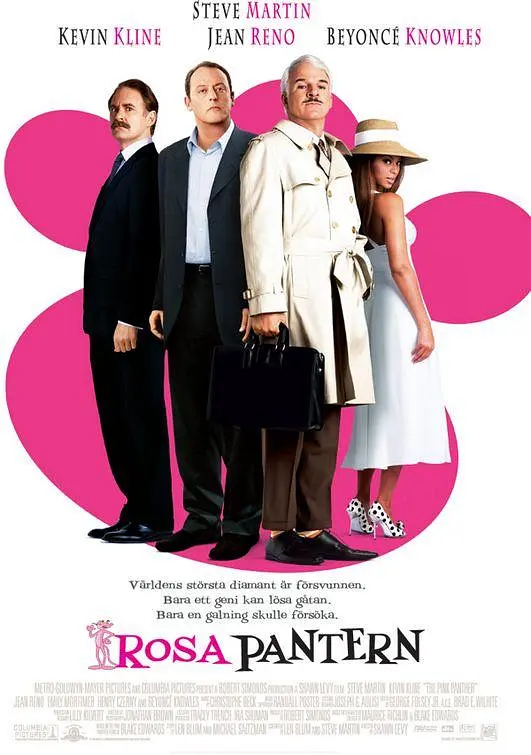
国际足球教练在庆功派对中不幸中毒镖毙命,手上的钻石戒指“粉红豹”也随之失踪。谋杀与失窃案迅速成为关注焦点。破案重任落到总探长德雷福斯(凯文·克莱恩 Kevin Kline 饰)肩上。无奈中,他想到了最佳破案人选——探员杰奎斯•克鲁索(史蒂夫·马丁 Steve Martin 饰)。临危受命的克劳索与总探长指派的木讷探员波顿(让·雷诺 Jean Reno 饰)组合成为一对儿“黄金搭档”。克劳索将教练女友歌坛天后仙妮娅(碧昂丝·诺尔斯 Beyoncé Knowles 饰)列为首要的嫌疑对象,谁知调查时却对她一见倾心。
一路上克劳索遭遇各种勤快,钻石贩子、黑道分子、傲气足球明星、赌场老板、风情女政客,各色人物轮番登场,究竟谁才是名钻大盗?案情的进展一波三折,克劳索该如何按时侦破这桩惊世大案,同时有效提防虎视眈眈的总探长把功劳据为己有?









![两个月亮[电影解说]](https://img.lzzyimg.com/upload/vod/20230216-1/0a74846f094625640a3437a1dd87e730.jpg)



![扫黑行动[电影解说]](https://img.lzzyimg.com/upload/vod/20230112-1/beafe8d63bda99edaa00c14063410d6f.jpg)
![马戏团1928[电影解说]](https://img.lzzyimg.com/upload/vod/20230715-1/c481e0450650a6cad2905f0a9a82d42f.jpg)






![你第一季[电影解说]](https://img.lzzyimg.com/upload/vod/20230924-1/c15d770a67196188f03dcaca2e644df0.jpg)
![擅长捉弄的高木同学[电影解说]](https://img.lzzyimg.com/upload/vod/20230727-1/4fb6ce8af3f6627987b5792664b658c3.jpg)



![华丽的诱惑[电影解说]](https://img.lzzyimg.com/upload/vod/20230830-1/2c1df94f209dc3efac77ba198829610d.jpg)


![骨瓷[电影解说]](https://img.lzzyimg.com/upload/vod/20230327-1/92ba9f60ed116e1fab4f5708a8dc993a.jpg)

![我要成为世界最强偶像[电影解说]](https://img.lzzyimg.com/upload/vod/20230509-1/7c782ef22350b75342a6c53645a7441d.jpg)